A lot of the conversation around AI is loud, confusing, and extreme.
On one side, you hear that AI is going to replace everyone. On the other, you're told to "just use ChatGPT" and everything will magically work itself out.
Neither of those is true.
What is true is this:
AI is quietly giving small businesses capabilities that weren't possible even a year ago. Not by replacing owners or teams — but by amplifying them.
In other words: a real advantage.
But there's a catch.
AI only works when a business is structured in a way that allows it to plug in.
The Real Opportunity
(That Most People Are Missing)
If you're a small business owner, you already know this:
You don't lose to bigger competitors because they're smarter or work harder. You lose because they have systems — and you have everything living in your head.
AI changes that.
For the first time, small businesses can:
- 01 respond like a full office without hiring one
- 02 follow up perfectly without remembering to
- 03 keep information organized without constant admin work
- 04 make decisions with context instead of guesswork
This isn't theory. It's happening right now.
And the businesses that understand how to use AI correctly are starting to feel it — not as more work, but as less pressure.
"AI doesn't fix chaos. Structure fixes chaos. AI multiplies structure.
Why AI Feels Powerful… and Frustrating at the Same Time
Most owners I talk to aren't afraid of AI. They're curious about it. They've experimented with it. They can tell it's powerful.
But they also feel stuck. They've tried tools. They've watched videos. They've downloaded apps.
And yet it still feels disconnected from the real work of running a business.
That's because AI doesn't replace structure — it depends on it.
If information is scattered…
If workflows are unclear…
If everything routes through the owner…
AI doesn't magically fix that.
The Simple Truth. AI doesn't fix chaos. Structure fixes chaos. AI multiplies structure.
When a business is structured well, AI becomes a superpower. When it's not, AI just feels like another thing to manage.
This is why some businesses feel instant relief when they introduce AI — and others walk away thinking it's overrated.
 Image
Image
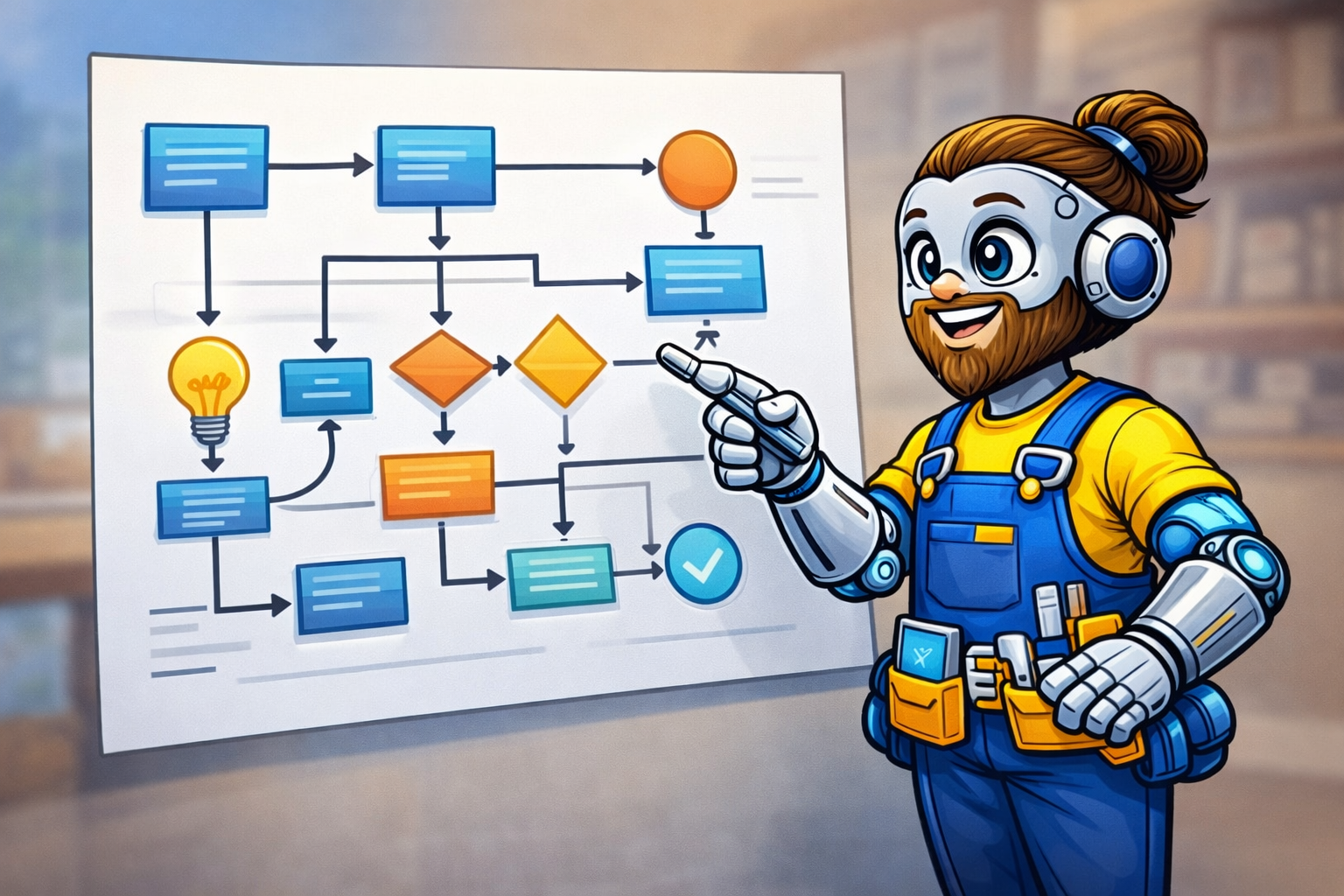
How AI Actually Fits Into a
Real Business
Inputs
Where information comes from (calls, forms, messages, bookings, sales)
Memory
Where that information is stored so it doesn't get lost
Workflows
What happens next — automatically or with human review
Outputs
Responses, updates, reminders, summaries, follow-ups
Guardrails
Clear rules for what AI can do on its own and what requires approval
When these pieces are in place, AI stops feeling abstract. It starts acting like a quiet, reliable assistant in the background — holding context, reducing interruptions, and keeping things moving.
The Advantage Nobody Is
Talking About
Here's what excites me most about this moment. AI doesn't just help you keep up. It lets small businesses punch above their weight.
You don't need:
- — more staff
- — more software
- — more subscriptions
You need:
- — fewer dropped balls
- — cleaner handoffs
- — less mental load
- — better use of information
That's the advantage. Not flash. Not buzzwords. Just a business that runs better — and feels lighter to operate.
Where Most Owners Should Start
The mistake I see over and over is jumping straight into tools. The better first step is clarity.
Before automating anything, you need to know: how your business actually works; where information gets lost; where AI would help — and where it shouldn't.
That's exactly why I start with a diagnostic.
 Image
Image